Author Archives: back_up

Scientific Study Shows that Young Children’s IQ is Impacted by Mold Exposure

Don't Let Mold Exposure Impact Your Child's Future

Don’t Let Mold Exposure Impact Your Child’s Future

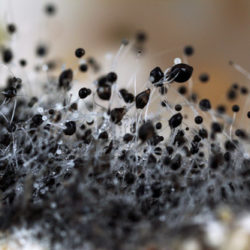
Sometimes we think of black mold as a nuisance and that there isn’t a danger other than some respiratory distress when the spores are inhaled. But a new study from the Bio-ethical Committee of Jagiellonian University Medical College in Krakow, Poland, has released some alarming information regarding the effects that toxic black mold has on kids.

The Findings

After a 6-year follow up of children who were exposed to toxic mold, here are the findings from the college. “The group of children who completed the 6-year follow-up consisted of 277 babies born at term. Out of the whole sample, 52 children (18.8 %) lived for shorter periods (<=2 years) and 15 (5.4%) for longer periods than 2 years in mold-contaminated homes. Children who were exposed for longer periods to indoor molds had significant cognitive deficits of about 10 points. The results showed that longer exposure to indoor molds tripled the risk of low IQ scoring (OR= 3.53; 95%CI: 1.11 – 11.27) compared with the group with no exposure.”

Don’t Take Chances

Toxic mold has now been proven to be detrimental to younger children by lower cognitive skills and lower IQ scores. Protect yourself and your loved ones and get rid of any toxic black mold by mold remediation that will rid your house, home, or apartment of mold infestation.

The professionals at Stern Mold are experts at mold remediation to protect your family from black mold complications. We’re part of the Stern Environmental Group and we will answer all of your questions or schedule a free mold inspection at your residence. Serving the New Jersey, New York City, and Long Island areas since 1995.
What Color is Mold? Is It Always Black?

Black Mold Isn't the Only Kind of Mold You Should Look for

Black Mold Isn’t the Only Kind of Mold You Should Look for

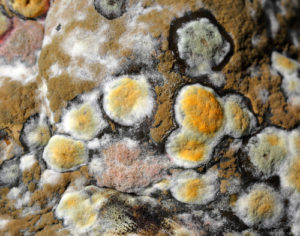
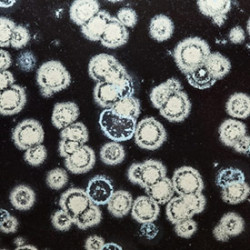
The mold family includes thousands of types and colors, but if you are only familiar with black, it’s probably because of the media attention given to it and mold remediation. Read on for the most common types of mold encountered in your home or place of business.

Green

Green is generally thought to be a variety of fungus, though there are thousands of species of green mold in the world.

Brown/Gray/Olive Green

Molds in this color family are common Cladosporium. You will find it on plant leaves outside and inside a house or building. It can grow on walls and carpet that is damp.

Blue/White/Green

Belonging to the Penicillium genus, these molds were once used to create the antibiotic penicillin. It grows on food and walls and is one of the most common molds that bother people with allergies.

Yellow/Green/Black

The Aspergillus molds family includes yellow, black and green molds are commonly inhaled every day. People with compromised immune systems and weak lungs can develop aspergillosis, a condition that includes coughing and sinus issues, as well as more serious health problems.

Black/Gray

The black or gray mold Alternaria, primarily an outdoor mold, has been found in a high percentage of indoor dust samples and has been linked asthma.

Pink

If you find mold of a pinkish color in your home, it’s most likely a bacteria form, not a mold in the true sense. It can develop on soap or shampoo containers or on shower walls.

Do you need professional mold remediation in your home or business? Our eco-friendly two-step process usually is completed in one day. Contact us today to schedule a free mold inspection.


Inhalation of Mold and Dust – a Health Hazard

Inhaled Mold Spores Can Be Detrimental to Health

Inhaled Mold Spores Can Be Detrimental to Health

Big things come in small packages, and that applies to health risks as well. Dust and mold spores may not be visible to the naked eye, but they can have a serious impact on your physical well-being. Why do these microscopic particles create such a threat?

Mold Spores: Small but Mighty

Even the largest mold spores measure only 40 microns. In comparison, a human hair ranges from 100 to 150 microns. At that size, it’s easy for spores to slip past the natural filtering in your nasal passages, causing irritation to your upper respiratory system that triggers allergic reactions.

People who don’t generally suffer from allergies can still experience mild symptoms, such as wheezing and a runny nose, but the more sensitive an individual is, the more serious the effects. Reactions can range from chronic sinus infections to asthma attacks as well as lung infections in people with compromised immune systems.

Dangers of Dust in the Air

Dust is always present in the air, but treatments like traditional mold remediation can aggravate their presence. When building materials are removed, chemical vapors, silica particles and other irritants are released to combine with existing dust motes. Such disturbances also stir up mold spores that are dispersed into the air, where they can enter your system or find a new surface where they will continue to multiply.

State-of-the-Art Mold Remediation in NYC and northern NJ

Stern Mold uses a proprietary system called MoldExterm for effective and eco-friendly mold removal. Visit our website to learn more about why MoldExterm is superior to traditional mold remediation.


What Are the Most Common Types of Mold?

Temp

There are more than 100,000 species of mold.

Just as the word “flower” encompasses thousands of different types of plants, there are more than 100,000 species that fit under the term “mold.” Here’s a look at the distinguishing characteristics found in some of the more common types of mold.

• Stachybotrys atra is the species that has come to be referred to as “black mold” due to its dark greenish-black color. While the mold itself is not toxic, it does produce mycotoxins that can cause a variety of health problems depending on a person’s sensitivity and length of exposure. Hidden black mold can sometimes be detected by its distinctive musty odor.

• Aspergillus is found both indoors and outdoors, so you inhale these spores every day, usually with no ill effects. This species, however, is a powerful allergic irritant, so individuals with allergies are susceptible to upper respiratory symptoms such as coughing and sinus congestion. People with lung conditions or weakened immune systems are vulnerable to a disease called aspergillosis.

• Cladosporium has a black pepper-like appearance and is often found in toilet tanks or on window sills. This variety of mold does not produce mycotoxins, but like aspergillus it can trigger upper respiratory distress in some people.

• Orange- or red-colored mold is usually found outdoors, where it serves to break down dead trees and other organic materials. Mold that appears white is generally in an early stage of development.

Rely on Stern Mold for Cost-Effective, Non-Intrusive Mold Remediation

Regardless of the species, our proprietary MoldExterm process removes mold more thoroughly and safely than traditional mold remediation. Contact Stern Mold today to schedule a free mold inspection for your NYC or northern NJ home.

What Does the CDC Say About Mold Exposure

Let Us Help Exterminate Your Mold Today!

Let Us Help Exterminate Your Mold Today!

The Centers for Disease Control and Prevention (CDC) is an organization under the Department of Health and Human Services that is charged with fighting disease and other threats to public health. Here’s some valuable information they provide about mold and its effects.

Where is Mold Found?

Any warm, humid area can provide a potential breeding ground for mold. Outdoor mold is most commonly found growing on decomposing organic materials such as felled trees, while indoor mold generally occurs in damp, humid areas such as bathrooms and basements.

How Does Mold Affect People?

Mold can trigger allergic symptoms such as wheezing, sinus congestion and red, itchy eyes. People with serious allergies or preexisting lung conditions can experience fever, shortness of breath and other strong reactions.

How Can You Limit Exposure to Mold?

Mold needs moisture to survive, so humidity levels should be kept low and water leaks or floods should be cleaned up immediately. If you find an infestation in your home, you should arrange for professional mold remediation regardless of what type it may be.

Should You Seek Medical Assistance?

If you’ve had extensive exposure to mold, don’t take chances with your health. Consult your primary care physician, who will determine whether or not your symptoms are severe enough for a referral to an allergist or other specialist.

State-of-the-Art Mold Treatment in NYC and Northern NJ

As the CDC recommends, you shouldn’t attempt mold remediation on your own. Our friendly and professionally trained technicians will remove mold and take measures to prevent its return. Visit our website to learn more about our efficient, effective and eco-friendly MoldExterm process.

« Older Entries Recent Entries »