
Author Archives: back_up

What Are the Impacts of Hidden Mold?

Mold Anatomy

Hidden Mold

As we get older, we become accustomed to aches and being more frail. Feeling run down and having unexplained flu-like symptoms is often endured and ignored. The same often applies to people with asthma or who are highly sensitive to allergies. Many people suffering from mysterious illnesses do not realize they really need a mold treatment of their home or business.

A toxin in many homes

ABC News tells the story of 5-year-old Caitlin Murray. She suffered for three years with terrible headaches and swelling on her face. The doctors tested her for leukemia, cystic fibrosis, and many other diseases without being able to identify the true cause of her illness. Only when she and her family left their Pennington, New Jersey home did Caitlin’s condition begin to improve. Jill Murray of the Children’s Hospital Philadelphia diagnostic center found large amounts of mold in the crawlspace.

One in three persons affected

According to Dr. David Zhang, who is a biologist with New York’s Mt. Sinai Medical Center, 50 of the over 100,000 different mold species are toxic. Also, one out of every three people are allergic to mold. And exposure to mold spores can trigger life-threatening problems for children, the elderly, people with asthma, and anyone with a compromised immune system. Mold not only damages the physical health of home owners and occupants, it can lower a home’s value and make it difficult to sell.

One of the most potentially harmful issues you may have in your home or business can be easily addressed and corrected. Call the experienced professionals at Stern Mold for a free inspection and mold treatment consultation today.
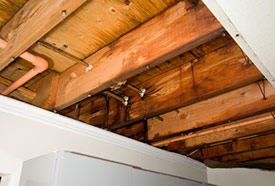
Is All Black Colored Mold Dangerous?

With all the attention given to the problem of black mold in homes and buildings, people have come to assume that all such growths are toxic. In reality, there are types of dark-colored mold referred to as “cosmetic” that present little danger to your home or your health.

But if you discover black mold, how can you tell which type it is? Here is some helpful information about identifying and treating cosmetic mold.

What causes cosmetic mold?

Framing lumber used in building construction sometimes comes with a harmless form of black mold. These “bluestain” fungi develop mainly on sapwood, which is the main part of a tree used for building lumber.

Recognizing the signs

Indoor mold growth is usually uninterrupted, spreading out to neighboring surfaces. An interrupted patch of mold that appears to have stopped along a random straight line is the most common evidence of cosmetic mold. For instance, you may see mold that stops at the cut end of a rafter, or side-by-side beams where only one has growth.

Steps to take when discovering cosmetic mold

If black mold is found on dry wood in configurations as described above with no signs of active growth, no action is needed. However, the presence of cosmetic mold can support the growth of other, more troublesome varieties. Inspect and monitor areas of cosmetic mold for the appearance of active colonies or major risk factors such as dampness.

Why take a chance attempting to identify mold on your own? Get peace of mind with a free mold inspection by our experienced technicians at Stern Mold. Contact us today to schedule your appointment.

Mold Cleanup – Can You Do-It-Yourself Safely?

Mold in your home is never good. For one thing, it can mean there is moisture seepage or a leak causing damp conditions, and for another, mold is unhealthy and can pose health problems.

Removing Mold Safely in Small Areas

When you’re faced with moldy residue, the first instinct is to clean the area eliminating the moldy material. If the area is relatively small, it is possible to remove the mold by thoroughly cleaning but it also depends on the type of material that needs cleaning. For example,moldy carpeting isn’t cleanable, and moldy drywall and insulation both need to be removed and replaced.

If it’s possible to clean a small surface, these are the things you’ll need:

  • Rubber gloves
  • Disposable mask
  • Safety glasses
  • Recommended mold remover
  • Disposable wipes, paper towels, rags or sponge

Using Professional Services

Keep in mind there is a reason for the mold and cleaning it is only part of the process. The cause must first be found and fixed to avoid future mold problems. For this reason, it’s recommended that professionals handle the job. Not only will they find the problem, they’ll provide the proper mold treatment.

The process for mold treatment for many years was the costly process of remediation. This process can take days or weeks and only deals with the symptoms. With the MoldExterm treatment from Stern Mold, we tackle the cause of the problem usually in one visit.

For issues with mold, our service technicians are at the ready to answer your questions, provide a free inspection, and devise a plan of attack to remove unsightly mold. Contact us at your earliest convenience to schedule an appointment.

Is It Mineral Staining or Mold in My Basement?

If you have a basement, often times you may see discolorations of fluffy build-up on the walls. The first thing that usually comes to mind is “we have mold” but that isn’t always the case.

An active problem in basements is efflorescence, also known as mineral salts. You may see discolorations including white, green, tan, yellow, brown, or grey colored crystalline powder on the walls and covering the mortar between block joints. The efflorescence is created due to moisture. As the moisture evaporates, it leaves behind mineral staining.

When checking your basement for mineral staining, efflorescence may have the characteristics of a fibrous or spiky substance, fluffy cotton, fiberglass, white powder, or a crusted or fuzzy appearance.

The bad news is efflorescence isn’t picky about the type of material it affects. Mineral salt residue leaches out of stucco, concrete stone, brick, concrete and stone. The good news is it is not mold but it is a red flag that wet conditions are present that could lead to a moldy basement.

As there are different kinds of mineral salts including vanadium, nitrates, chromium, and chlorides, to find out what type is in your basement and how to treat is best determined by a professional. That’s what we do at Stern Mold. Our experienced technicians test the substance in your basement to determine if it is mineral salts or mold.

If water seepage is causing a problem with efflorescence that could lead to mold, you’ll want to have your basement inspected as soon as possible. Contact our staff for any questions, information, or concerns about mold problems and to schedule a free mold inspection and price quote.

How Fast Does Mold Grow? Is This Old Mold?

Mold Growth

Mold Growth

Have you recently discovered a mold colony in your building or home? Determining the cause is an important factor in successful treatment. Failing to address the original situation will likely result in continued recurrences. Here are some of the mold identification clues experts use to determine the age of an infestation, which can indicate probable cause.

How quickly can mold grow?

Mycologists, who are biologists specializing in the study of fungi, have found that mold growth can occur over a period as short as two to three days. However, simply examining the mold itself gives no indication of the time frame. Observations of the surrounding area and surfaces provide more reliable evidence for an estimate.

Recent or single-event growth

Water is the principal ingredient required for mold growth, so any incident that creates dampness in a building or home results in prime conditions for an colony to develop. If mold turns up after a burst pipe or a roof leak, it’s generally assumed that it’s a one-time localized occurrence.

Long-standing or multi-event growth

Buildings that are more than 20 years old often have a history of leaks, flooding and other events that create an overall environment conducive to the growth of mold. They also tend to contain drywall, fiberglass insulation and other “mold-friendly” materials that make it easy for mold to spread from one area to another. Rot on wood, carpeting or other surfaces is another reliable sign of long-standing mold.

Don’t take on the task of mold identification by yourself. Contact us today to schedule a free mold inspection by our skilled professional technicians.

« Older Entries Recent Entries »