Category Archives: Mold Information

Mold, Now Called a BioAerosol, Can Cause Hypersensitivity Disease

Mold Spores Stay in the Air Causing Health Problems

Mold Spores Can Cause Hypersensitivity Disease

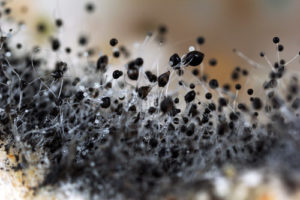
Health scientists have recently improved their understanding of why mold causes illness. As you may already know, you don’t need to touch mold to get sick, because you’re already breathing it in. Like airborne germs, mold particles infiltrate our indoor air as a “bioaerosol.”

Bioaerosols such as mold and other fungi are known to cause allergy-related illnesses called hypersensitivity diseases.

Hypersensitivity diseases take many forms depending on the type of mold exposure and the individual. The four most common mold-related illnesses according to NJDOH are:

Building-related asthma: Coughing, shortness of breath, chest pains. May occur immediately or hours later.

Allergic rhinitis: Itchy eyes and runny or stuffy nose symptoms.

Hypersensitivity pneumonitis: Fever, coughing, fatigue, weight loss, and other acute symptoms of pneumonia. Often comes back repeatedly.

Humidifier fever: Fever, chills, and cold symptoms associated with mold or other biotoxins being dispersed by a humidifier.

Unfortunately, once a person has a hypersensitivity, just a small amount of the mold particles can re-trigger the symptoms at any time. So, if your home has a mold infestation you need to bring in our NJ mold treatment professionals.

Stern’s NJ Mold Treatment Offers Permanent Protection

Typical household cleaners can only partially remove a mold problem, and untreated mold spores can easily grow back.

Stern Mold uses a two-part process of antimicrobial cleaning followed by a polymer seal. We destroy the mold, then add a blocking layer so the spores will never cause another outbreak. You can breathe easy, especially because our NJ mold treatment doesn’t require breaking into walls and ceilings.

Take action to prevent asthma and allergy problems and schedule a free estimate for NJ mold treatment today.

NJ Gets Serious about Mold Calling It a BioAerosol

Mold is Now Called a BioAerosol

Mold is Now Called a BioAerosol

If the name bioaerosol sounds a bit scary, there’s a reason for that. Although bioaerosols are naturally occurring all around us, too many of them can cause disease or illness. Mold has been identified as a source of potentially hazardous bioaerosol particles, making it all the more important to call for NJ mold treatment after discovering mold.

Bioaerosols include tiny airborne microorganisms and their waste. In addition to mold, others include algae, bacteria, the flu virus, dust mites, and cat dander. Mold fungus creates tiny particles that invade the air around us, especially when mold grows indoors.

Health Effects of Bioaerosols

Our bodies can typically defend against small amounts of bioaerosols. Health problems start with pathogenic species or simply too many particles. Breathing in mold affects people who already have asthma or another respiratory condition, but anyone might become sick or develop allergic responses to mold.

The NJ Department of Health warns that mold bioaerosols can cause hypersensitivity diseases, which include asthma, rhinitis, pneumonitis, and humidifier fever. When such illnesses exist with the known presence of mold, it can be assumed that the mold is at least partially to blame.

Protection Against Mold Exposure

If you have found mold, the area must be thoroughly cleaned and treated. Our NJ mold treatment service comes with a free inspection to confirm the presence of mold. A deep cleaning of the home, including the HVAC system, may be necessary. However, the source needs to be cleaned so it does not continue releasing bioaerosols into the home.

Contact Stern Mold to schedule a visit and learn how our NJ mold treatment both eliminates mold and prevents it from returning.

Top Mold Exposure Questions for NYC Residents

Got Questions About Mold?

Got Questions About Mold Exposure? Get the Answers From Stern Mold.

The effects of a mold infestation in your home or building are more far-reaching than you may realize. Our NYC mold treatment experts answer some of the top questions you might have about mold exposure.

Common Questions About Mold Exposure

1. Is it sufficient to clean only major items and surfaces such as furniture, clothing and carpeting?

When it comes to mold, there’s no such thing as “spot” cleaning. Due to their microscopic size, mold spores are present everywhere. Be sure to clean decorative accessories, canned foods, toiletries and everything inside your home or building.

2. How do I clean electronic devices such as computers and TVs?

Clean the casings, then vacuum the openings to extract dust and mold spores.

3. What’s the best way to handle paper items like books and documents?

  • Books that have remained closed should be vacuumed carefully, but any books that were open should be discarded.
  • Photos can be washed, but frames made from a porous material should be thrown away.
  • Documents should be copied or scanned, then the originals should be destroyed.

4. Should I use a fresh cleaning cloth for each item?

The cleaning process alternates between wiping and vacuuming, so you can reuse one cloth.

5. Do I need a special type of vacuum cleaner?

Use a vacuum with a HEPA filter and replace the filter when you are done cleaning.

Stern Mold: The Leader in Effective NYC Mold Treatment

Our proprietary MoldExterm system eliminates mold and leaves behind a protective barrier that prevents future recurrences. Contact us today and schedule a free mold inspection of your home or building with one of our experienced technicians.

Manhattan Mold a Problem in Student Housing and Universities

Group of college students leaning on banister

Students in College Housing Can be Exposed to Mold in Manhattan.

College life brings a host of health dangers due to so many people sharing close quarters in the classes and dormitories. New research indicates that universities may also be harbingers of toxic mold. The typically young, healthy age group of college students does not make them immune to the harmful effects of mold.

Scientists surveyed students at one university over a period of time to collect data on dampness and mildew on campus. The report deserves a full read by anyone interested in the facts about mold toxicity in rental housing. The bottom line is that college students are at risk for mold-related respiratory issues.

Mold in College Dorms

In Manhattan and other densely populated areas, mold infestations can easily affect numerous people. Mold spores spread wherever moisture and food sources are present. Failure to dry out mildewy areas or to bring in a Manhattan mold treatment service can make matters worse.

The scientists suspect that college students may not clean up as well as homeowners, and students may not report mold problems early enough. Apartment renters have the same problem and, unfortunately, tenants or students have little motivation to correct mold problems in temporary housing.

With students moving in and out of college campuses regularly, and mold problems going unnoticed, it seems that university staff should always keep an eye on the problem and call our Manhattan mold treatment service whenever any sign of mold has been detected.

Rental property owners and college administrators alike can contact Stern Mold for a free inspection to find out if you need Manhattan mold treatment before the problem endangers residents or damages property.

Crawl Spaces – the Hidden Space Mold Loves

Mold Spores Found in a Crawl Space

Mold Spores Found in a Crawl Space

Crawl spaces turn into mold incubators whenever spores are present and the relative humidity goes above 50%. Mold does not need much warmth or sunlight to grow.

Give it some water and food — any kind of wood or paper serves as food for mold — and suddenly you’ll have a mold infestation on and around the building’s structure, and spreading fast.

Moisture enters crawl spaces in several ways:

  • Plumbing leaks
  • Crawl space vents allow moist air in
  • Moisture evaporates from the ground below and gets trapped
  • Rainwater drainage problems cause pooled water

If you think you have mold under your building, get a free inspection for NYC mold remediation so you know. As the EPA points out, toxic mold can be any color (not just black) and can cause health problems even when dead or inactive.

How to Remediate Mold in a Crawl Space

For starters, find the water source first. Major problems like plumbing leaks should be repaired to stifle the mold growth conditions.

Once a leak or standing water issue has been fixed, you’ll still need an NYC mold remediation service to assess conditions and prevent mold. Relative humidity tends to be higher in a cool crawl space, so mold spores can regrow with only a small amount of moisture present.

Fortunately, it’s now possible to treat crawl space mold without needing to rip out everything and rebuild. Stern Mold uses bio remedial mold treatment consisting of antimicrobials and a polymer seal that ensure mold colonies are destroyed and prevented from coming back.

Our NYC mold remediation service comes with a guarantee. Call 888-887-8376 or contact us online for a free inspection and quote.

« Older Entries Recent Entries »